EPIPACE is positioned within the established implantable pacemaker market, with potential future expansion into physiologic pacing and selected heart-failure applications
The platform is designed to address two major clinical priorities: reducing the long-term burden of conventional pacing hardware and supporting more c

The global pacemaker market was valued at approximately $5.5 billion in 2024 and is projected to reach approximately $7.7 billion by 2030, representing annual growth of approximately 5.7%. North America accounted for approximately 43.4% of global revenue in 2024, supported by advanced electrophysiology infrastructure, high implantation volumes, established reimbursement, and early adoption of innovative pacing technologies
Source: Grand View Research, Pacemaker Market Report, 2025–2030
Age-related conduction disease and bradyarrhythmias are expanding the number of patients who may require permanent cardiac pacing
More patients are living longer with rhythm disorders, cardiovascular disease, and implanted cardiac devices
Healthcare systems are increasingly adopting technologies intended to eliminate conventional leads and generator pockets
Patients may require generator replacements, lead revisions, system upgrades, and additional procedures over decades of pacing
These trends create sustained demand for pacing technologies designed to reduce chronic hardware burden, extend device longevity, and simplify long-term patient management.
The leadless pacemaker segment was estimated at approximately $982 million in 2025 and is projected to reach approximately $1.62 billion by 2033, growing at about 6.6% annually. This growth reflects increasing interest in pacing systems that avoid conventional transvenous leads and subcutaneous generator pockets
Unlike current intracardiac leadless pacemakers, EPIPACE is designed for placement on the external surface of the heart, outside the cardiac chambers and bloodstream.
Source: Heart Failure Society of America, HF Stats 2024.

Conventional right-ventricular pacing can produce electrical and mechanical dyssynchrony in susceptible patients. Clinical guidelines recognize that substantial right-ventricular pacing—generally 20% to 40% or more of ventricular beats—may induce cardiomyopathy in a subset of patients
Cardiac physiologic pacing strategies are intended to preserve or restore coordinated ventricular activation and reduce the risk of pacing-related ventricular dysfunction
This creates an important development opportunity for pacing systems designed to support left-ventricular activation and more physiologic contraction
EPIPACE is designed to eliminate conventional transvenous leads, avoid chronic intracardiac hardware, and reduce dependence on generator-pocket procedures
The platform is designed for direct epicardial placement on the left ventricle, creating a potential pathway toward ventricular-function preservation
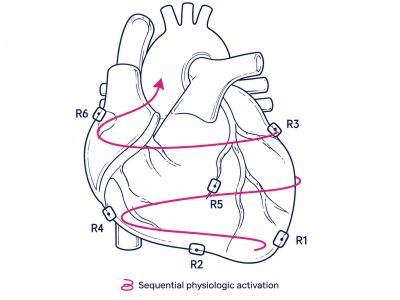
Additional receivers may enable coordinated stimulation across selected cardiac locations rather than relying on activation from a single pacing site
Programmed stimulation from the apex toward the base is intended to support the heart’s natural torsional or spiral contraction pattern
EPIPACE combines the commercial potential of next-generation implantable pacing with a future expansion opportunity in physiologic pacing, ventricular synchrony, and selected heart-failure application
EPIPACE is not being developed simply as a smaller conventional pacemaker. It represents a different anatomical and engineering strategy intended to address device-related complications, lifetime pacing needs, ventricular synchrony, and future heart-failure applications
EPIPACE is an investigational medical-device platform under development and is not approved or cleared by the U.S. Food and Drug Administration for commercial use. Heart-failure prevention, ventricular resynchronization, self-charging, multi-site stimulation, and sequential physiologic activation are investigational applications that require further engineering validation, preclinical evaluation, regulatory review, and clinical study. Market estimates are provided by independent third-party sources and may vary according to methodology and product definitions
We use cookies to analyze website traffic and optimize your website experience. By accepting our use of cookies, your data will be aggregated with all other user data.